Most traders can find good stocks. What they struggle with is acting on the good ideas they already have. That was us for years.
We could read a chart. We understood trend, risk, position sizing, regimes and expectancy, and we could explain any of it to anyone. Then a position would start moving and the rules would quietly go out the window. We'd cut a winner at +2% because one red candle scared us. We'd slide a stop down to "give it room" and turn a small loss into a real one. We'd take a marginal setup out of boredom and have no capital left when the clean one finally showed up.
The spreadsheet showed it plainly. We cut winners short. We held losers too long. We forced trades in chop, then overrode our own exits, then did it all again. After enough years we had to admit what was going on. We knew plenty. We just couldn't keep our hands off a live trade.
So we stopped trying to willpower our way into discipline and built something that doesn't need any. We defined the regime that has to be in place, the screens that throw out the marginal setups, and the exit rules that trail a winner and cut a loser without us touching it. Then we tested it honestly. We built it on one window of history, checked it on a later window it had never seen, and kept only the rules that held up in both. Most of them didn't.
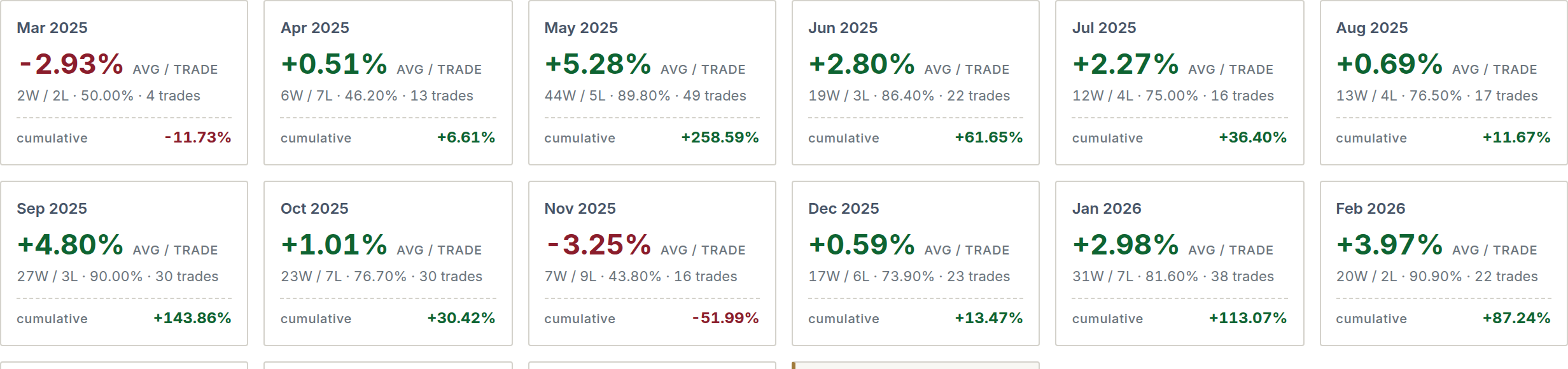
That's where ETF Setups came from. It's a set of rules that runs the same way whether we're calm or rattled, which is the part we could never do on our own. We publish every trade, including the losers and the red months. We've been sold enough cherry-picked screenshots to know the full record is the only thing worth reading, and we assume you feel the same.
If you already know how to trade and it's the execution that keeps costing you, this was built for you.

You can see all of them, losers included. The record is published month by month, and the bad months stay up.
We don't try to call where the market goes next. The rules say what to take and when to get out, and we do what they say.
We'd rather reject two-thirds of the candidates than hand you a long list of marginal ones you can't actually follow.
Every position gets a stop before it gets a target. You know what the trade can cost you before you take it.
Everything runs after the close. You place your orders in the morning and get on with the rest of your day.
No Lamborghinis, no lifestyle marketing, no win-rate fantasies. If you want to know whether it works, read the record.
Every trade we've taken is on there, and you can read it before you subscribe.